



China has poured tens of billions of pounds into UK businesses and strategic projects over the past two decades, and some of those investments allowed access to technology with potential military applications, according to findings shared with BBC Panorama. Adjusted to 2023 prices, the overall value of Chinese investment reached around £45bn, with the biggest surge taking place after a 2015 directive from Beijing that aimed to establish China as a world leader in advanced industries. Research from US based group AidData shows the UK has been the most targeted G7 nation for Chinese investment when measured against population and economic size. With exclusive access to AidData’s information, Panorama explored how this wave of investment led to highly sophisticated technology and specialist skills being transferred to China. A former GCHQ director said the UK had been “far too free” in allowing Chinese involvement in strategically sensitive sectors.
China’s investment boom in UK linked to hidden military technology access
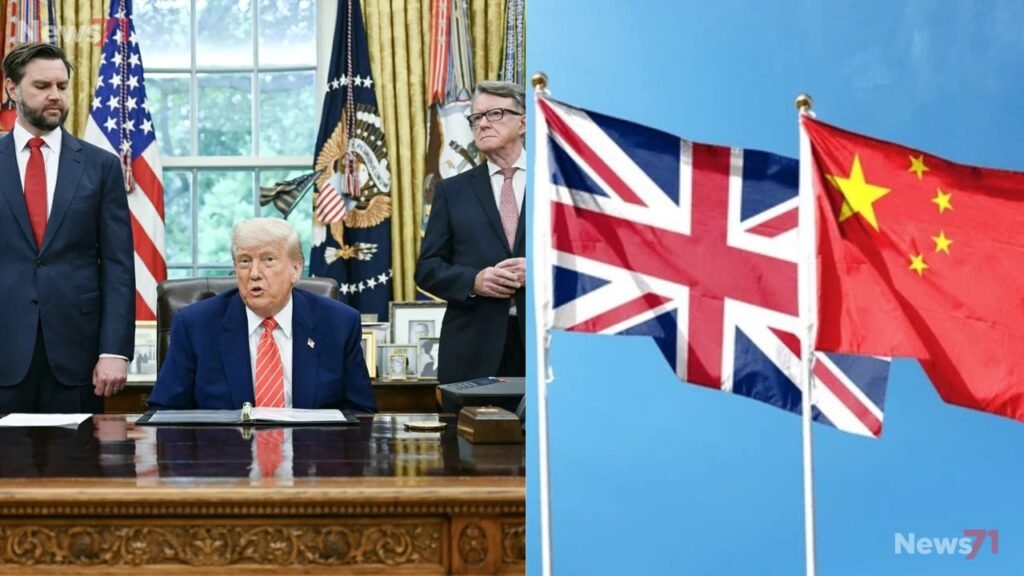
AidData’s work highlights that while some Chinese funded deals were commercial in nature, others closely aligned with China’s long term industrial strategy known as Made In China 2025. The policy, introduced a decade ago, set out ambitious goals for Chinese dominance in fields such as aerospace, robotics and electric vehicles. One major example reviewed by Panorama was Imagination Technologies, a semiconductor design company based in Hertfordshire. It became a takeover target in 2017 after losing Apple as a key customer and suffering a dramatic fall in its share price. The company was purchased for £550m by Canyon Bridge, a private equity firm whose funding was tied to Yitai Capital and ultimately to China Reform, an organisation reporting directly to China’s State Council. Just months before acquiring Imagination, Canyon Bridge had attempted to buy a US chip firm but was blocked under American investment screening rules. Imagination’s value lay largely in its intellectual property, built by UK engineers across decades. Although developed for commercial uses, the algorithms and designs also had potential applications in missile and drone technology.
Ron Black, Imagination’s former CEO, told Panorama that Chinese backers had initially claimed to be passive investors. However, he says he was later called to Beijing and asked to oversee the transfer of the company’s technology and expertise from British engineers to teams in China. When he resisted and alerted the UK government, China Reform attempted to place four new directors onto the company’s board. Black eventually resigned and was later found to have been unfairly dismissed. After his departure, significant portions of Imagination’s technology were moved to China. The company maintains that none of its products are used in military systems and that it complies with all export regulations. The UK’s ability to block foreign takeovers was limited in 2017, a time when the Cameron government was promoting what it called a golden era in relations with Beijing. Several former officials now say China took advantage of this period to secure investment driven access to vital UK technology. The UK has since strengthened investment screening laws, although national security experts warn the system is still not watertight.
source:BBC