

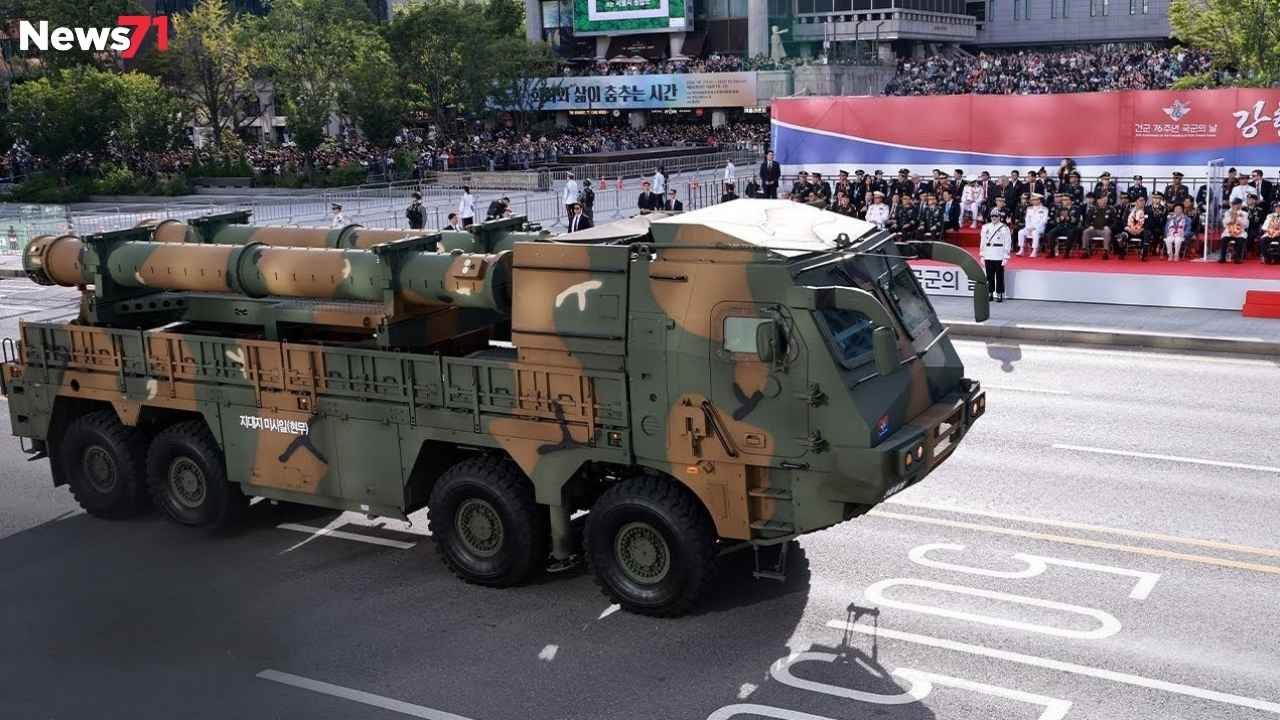
South Korea has announced plans to deploy its most powerful ballistic missile Hyunmoo-5, nicknamed the “monster missile” by the end of this year. The move marks a major boost to Seoul’s conventional firepower amid rising tensions with nuclear-armed North Korea.
Defense Minister Ahn Gyu-back told that South Korea must produce a “considerable” number of Missile Hyunmoo-5 to maintain a “balance of terror” against the North’s growing threat. He also hinted that an even more powerful next-generation missile is in development.
Although the Hyunmoo-5 is not a nuclear weapon South Korea remains a signatory to the Nuclear Non-Proliferation Treaty it has been widely viewed as a response to domestic calls for stronger deterrence.
What is the Monster Missile Hyunmoo-5?
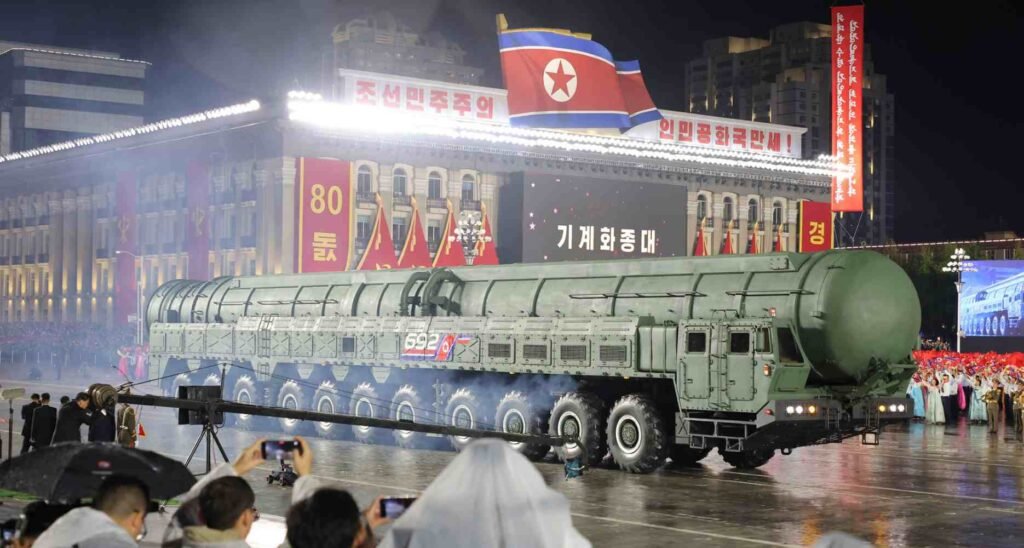
The Missile Hyunmoo-5 is a massive 36-tonne ballistic missile capable of carrying an eight-tonne warhead. Designed as a surface-to-surface missile, it can be launched from mobile platforms and is believed to measure around 16 meters in length.
Its “bunker-buster” warhead is reportedly powerful enough to destroy deeply buried command centers, such as those that might protect North Korean leadership in wartime. Depending on the payload, its range could vary from 600 km to over 5,000 km.
A South Korean defense official told that specific technical details and the deployment schedule remain classified for national security reasons.
Why Was It Developed?
The concept for the Missile Hyunmoo-5 originated after two deadly North Korean attacks in 2010 the sinking of the Cheonan warship and the shelling of Yeonpyeong Island which killed 50 South Koreans.
Since South Korea relies on the U.S. nuclear umbrella, it does not possess nuclear weapons. According to Dr. Yang Uk, a defense analyst at the Asan Institute for Policy Studies, “We don’t have nuclear weapons, so our only option is to build the most powerful conventional weapons possible.”
However, U.S. restrictions on South Korean missile payloads had limited progress until 2017, when then-President Donald Trump lifted the caps following North Korea’s hydrogen bomb test.
What Does It Mean for North-South Relations?
The missile’s deployment comes amid worsening inter-Korean relations. North Korea has cut off communications with Seoul since President Lee Jae Myung took office in June, ignoring his repeated calls for dialogue.
Lee has emphasized self-reliant defense as a key policy, arguing that South Korea must shed what he calls a “submissive mindset” toward foreign military dependence even as the country continues its alliance with Washington.
South Korea’s defense budget now amounts to 1.4 times North Korea’s entire GDP, ranking it fifth in global military strength. Its arms exports have also surged, particularly since Russia’s invasion of Ukraine. At the ADEX defense exhibition in Seoul this week, President Lee pledged “larger-than-expected” investment to make South Korea the world’s fourth-largest defense exporter.
Still, analysts are divided over whether the Missile Hyunmoo-5 will deter North Korean aggression or fuel further escalation. Pyongyang is expected to dismiss the missile’s threat publicly while highlighting its own nuclear capabilities.