

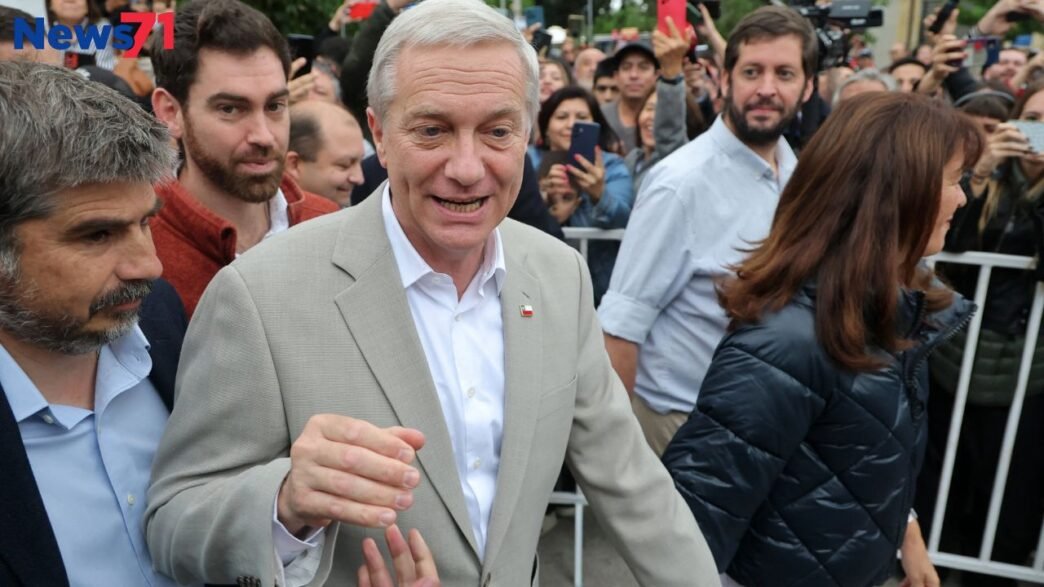
Ultra-conservative former congressman José Antonio Kast has been elected Chile’s next president. With more than 99% of polling stations counted, Kast secured 58.16% of the vote, defeating leftwing candidate Jeannette Jara, a former labour minister under outgoing president Gabriel Boric, who received 41.84%.
Kast, the son of a former Nazi party member, an admirer of former dictator Augusto Pinochet and a devout Catholic opposed to abortion and same-sex marriage, ran a campaign centred on tough security measures and a pledge to expel tens of thousands of undocumented migrants.
“Here, no individual won, no party won – Chile won, and hope won,” Kast told thousands of supporters after a long wait for his victory speech. “The hope of living without fear – that fear that torments families.”
Analysts say Kast successfully tapped into one of Chileans’ main concerns: rising violence, which has increased in recent years despite Chile remaining among the safest countries in Latin America.
Migration has also surged over the past decade, with the number of migrants doubling, driven largely by some 700,000 Venezuelans fleeing economic collapse. Throughout the campaign, Kast repeatedly linked migration to rising insecurity.
José Antonio Kast has been elected

He issued an ultimatum to the estimated 330,000 undocumented migrants – most of them Venezuelan – warning they must leave the country before the new president takes office on 11 March or face expulsion “with only the clothes on their backs”.
In his victory address, Kast said his government would show “great firmness” against those who threaten public safety.
“When we tell an irregular migrant that they are breaking the law and must leave our country if they ever want the chance to return, we mean it,” he said. “We must be firm against crime, organised crime, impunity and disorder.”
His platform included proposals inspired by Donald Trump’s policies, such as detention centres, border walls, electric fencing and trenches, along with an expanded military presence in the north along Chile’s borders with Peru and Bolivia.
This was Kast’s third presidential bid. In 2021, he lost the runoff election to Boric.
Boric congratulated Kast in a televised phone call, describing the result as “a clear victory”, and invited him to La Moneda palace on Monday to begin the transition of power.
“At some point, he will come to understand what the loneliness of power means, and the moments when very difficult decisions must be made,” Boric said.
Although Jara won the first round in November, Kast’s victory was widely expected, as he was projected to consolidate the votes of other rightwing candidates, which collectively outnumbered those on the left.
Jara conceded on Sunday and said she would lead a “constructive” opposition, while condemning “any hint of violence, wherever it comes from”.
International reactions were swift. US secretary of state Marco Rubio congratulated Kast, saying his victory strengthened alignment with leaders close to Donald Trump in the region.
“We are confident Chile will advance shared priorities including strengthening public security, ending illegal immigration and revitalising our commercial relationship,” Rubio said.
Argentina’s far-right president, Javier Milei, hailed Kast as a “friend”, calling the result “one more step” toward defending “life, liberty and private property” in the region. Brazil’s president, Luiz Inácio Lula da Silva, also offered congratulations, saying he would continue working with Chile to preserve South America as a “zone of peace”.
Source: theguardian.com
While many observers view Kast’s win as part of a broader rightwing shift across South America, others see it as part of Chile’s longstanding alternation of power between left and right since the end of military rule in 1990.
Despite his decisive victory, Kast will not hold an absolute majority in either chamber of Congress, even with the support of allied rightwing parties.
He has pledged to cut public spending by $6bn within 18 months but has not detailed how the reductions would be carried out.
“There are many things we don’t yet know about what a Kast government will look like because he has not explained how he will implement his proposals,” said Rossana Castiglioni, a political science professor at Universidad Diego Portales.
“While economic policy is likely to reflect typical rightwing adjustment measures, there is far less uncertainty about security policy, which has been the central pillar of his campaign.”