
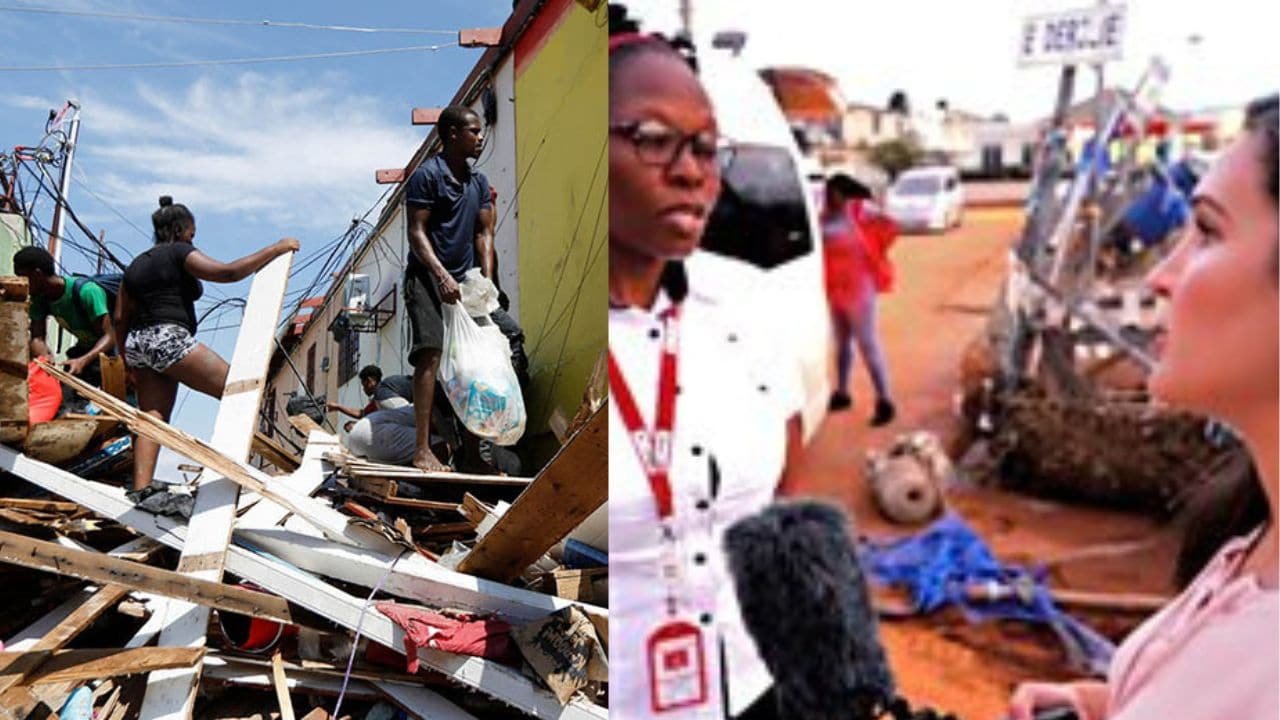
At least 19 people have died in Jamaica following the catastrophic impact of Hurricane Melissa, according to Information Minister Dana Morris Dixon. The Category Five storm has left widespread devastation across the island, as emergency crews struggle to deliver aid to isolated communities and search for missing residents. The powerful hurricane, one of the worst to ever hit the Caribbean, also claimed the lives of at least 30 people in neighboring Haiti, officials confirmed. In Jamaica, large parts of the country have been flattened, with Dixon describing entire communities marooned and devastating scenes in the western regions. Electricity remains out for most of the island, and with homes destroyed and roads flooded, thousands of people are desperate for food, water, and shelter. Many areas have been without running water for days, worsening the humanitarian crisis.
Hurricane Melissa Devastates Jamaica as Death Toll Rises and Aid Falters

Although aid supplies are now arriving more quickly at the main airport in Kingston, regional airports near the hardest hit areas remain only partially functional. Relief convoys are struggling to move supplies by land, with roads blocked by fallen trees, mud, and debris. A journey that once took one hour between Mandeville and Black River now takes up to eight, as infrastructure lies in ruins. In western Jamaica, the destruction is overwhelming. Roads are torn apart, homes are roofless, and residents are trying to repair what little remains. In the coastal town of Black River, survivor Olivia Cream told the BBC that she watched everything come apart as towering waves demolished her home. The area looks like Hiroshima, she said, adding that entire families were now living on the streets. Similar scenes were reported in Santa Cruz, where generators rumble amid the smell of fuel and mud. Barrington Robinson, a local janitor, described how he had to cut through fallen branches to reach work, saying simply, Every place flooded out. Me don’t know what to do.
Satellite images reveal near-total destruction in several Jamaican villages, with many buildings completely leveled. Trevor Whyte from Westmoreland said communication had collapsed: No one is able to reach their loved ones. Every tree is on the road, and you can’t go anywhere. Across Jamaica, residents are trying to clear streets as power crews race to restore electricity. The once lush, green landscape now resembles a wasteland of broken trees and debris. In neighboring Haiti, officials report that most deaths occurred after rivers overflowed, and thousands remain in shelters. Cuba also faced dangerous conditions, though no fatalities have been reported. More than three million people there were exposed to life-threatening winds and flooding, and hundreds of communities remain cut off. The international community has pledged support for Jamaica and other Caribbean nations affected by the hurricane. The World Food Programme is coordinating emergency logistics, while the US State Department is sending disaster response teams to assist with rescue and relief efforts. The UK government has announced an additional £5 million in aid to provide shelter kits, medical supplies, and solar-powered lanterns for affected communities.
As Jamaica begins its long road to recovery, officials warn that it could take months to restore normal life. The nation now faces one of its most difficult rebuilding challenges in recent history, as communities struggle to recover from the immense destruction left behind by Hurricane Melissa.
source:BBC