

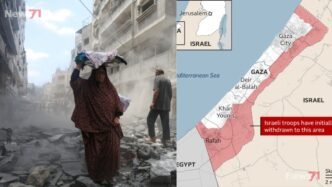
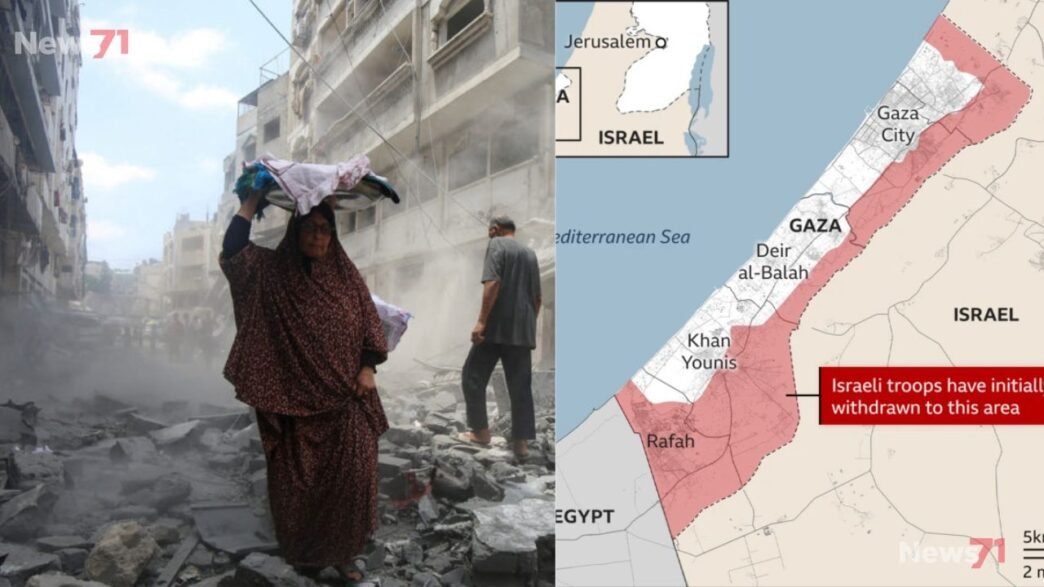
Israel has reportedly destroyed more than 1,500 buildings in areas of Gaza that have remained under its control since the ceasefire with Hamas began on 10 October. According to satellite images reviewed by BBC Verify, entire neighborhoods have been flattened in less than a month, showing widespread demolitions carried out by the Israel Defense Forces (IDF). The analysis, based on satellite imagery taken up to 8 November, suggests the true number of destroyed structures could be even higher, as not all areas were visible in available images. Some experts believe the demolitions may breach the terms of the ceasefire, which was brokered by the United States, Egypt, Qatar, and Turkey. However, an IDF spokesperson stated that all actions were conducted “in accordance with the ceasefire framework. The truce, based on US President Donald Trump’s 20-point peace plan for Gaza, called for a halt to all military operations, including aerial and artillery attacks. Despite this, BBC Verify’s visual analysis revealed that Israel airstrikes and demolitions have persisted on a large scale. Using radar-based change detection algorithms, analysts identified extensive destruction across Gaza and manually counted visibly demolished buildings.
Israel Airstrikes Continue to Level Gaza Buildings Despite Ongoing Ceasefire
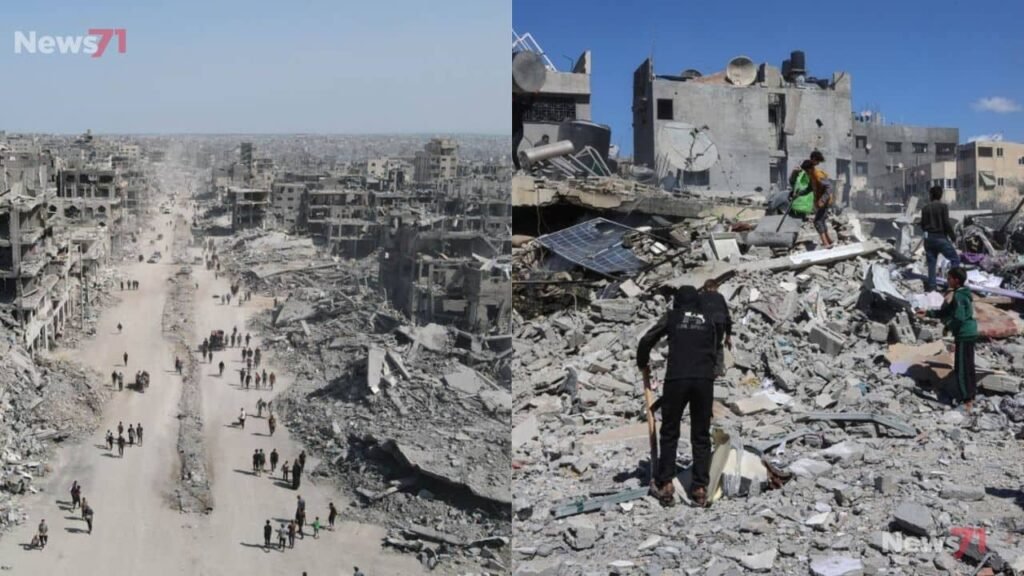
Much of the damage occurred behind what is known as the Yellow Line—a boundary marking areas that Israel agreed to withdraw from under the ceasefire terms. Yet, many of the destroyed buildings behind that line appeared undamaged before the ceasefire began. In eastern Khan Younis, near Abasan al-Kabira, entire rows of homes, gardens, and orchards were flattened. Before the destruction, satellite images showed intact houses surrounded by greenery. One displaced resident, Lana Khalil, described her former home as “a heaven filled with farms and vegetables. Now living in a nearby tent camp, she said residents could hear the demolition sounds from afar and expressed grief at losing everything. Similar scenes were recorded near al-Bayuk, east of Rafah, where newly destroyed buildings replaced previously undamaged neighborhoods. Footage captured early in November showed massive explosions and clouds of dust rising from the ruins. In Gaza City, destruction was also seen in Shejaiya and near the Indonesian hospital close to Jabalia camp.
While some Israeli officials argue the demolitions target Hamas tunnels and terror infrastructure, critics say such justifications violate international law. Former Israeli security official Eitan Shamir claimed the ceasefire’s restrictions apply only outside the Yellow Line and that Israel maintains the right to operate in areas it controls. Legal scholars, however, disagree. Adil Haque, professor of law at Rutgers University, said the destruction of civilian property by an occupying power is unlawful unless it is militarily necessary, which is not the case during a ceasefire. Other analysts, including Hugh Lovatt of the European Council on Foreign Relations, warned that Israel’s continued demolitions could undermine the fragile peace process. As Israel airstrikes and demolitions persist, experts caution that the longer the IDF maintains control behind the Yellow Line, the greater the risk that the ceasefire—and the broader peace plan—will collapse entirely.
source:BBC