

Opposition posters in Buenos Aires ahead of Sunday’s Argentina midterm elections featured President Javier Milei’s face over a US flag, an attempt to tap into anti-American sentiment surrounding Donald Trump’s alleged interference in Argentina’s vote.
Days before the election, Trump announced a $40 billion bailout for Argentina but warned that support would be withdrawn if Milei lost. Despite what many analysts described as the lowest point of Milei’s nearly two-year presidency marked by economic decline and corruption allegations Milei secured a surprise victory, winning roughly 41% to 32% against his main opponents.
The win gave Milei’s party, La Libertad Avanza, a majority in Congress when combined with the seats of the centre-right PRO, the party of former President Mauricio Macri, a longtime Milei ally. Even Milei admitted he had been caught off guard by the scale of the victory.
Argentina Midterm Election
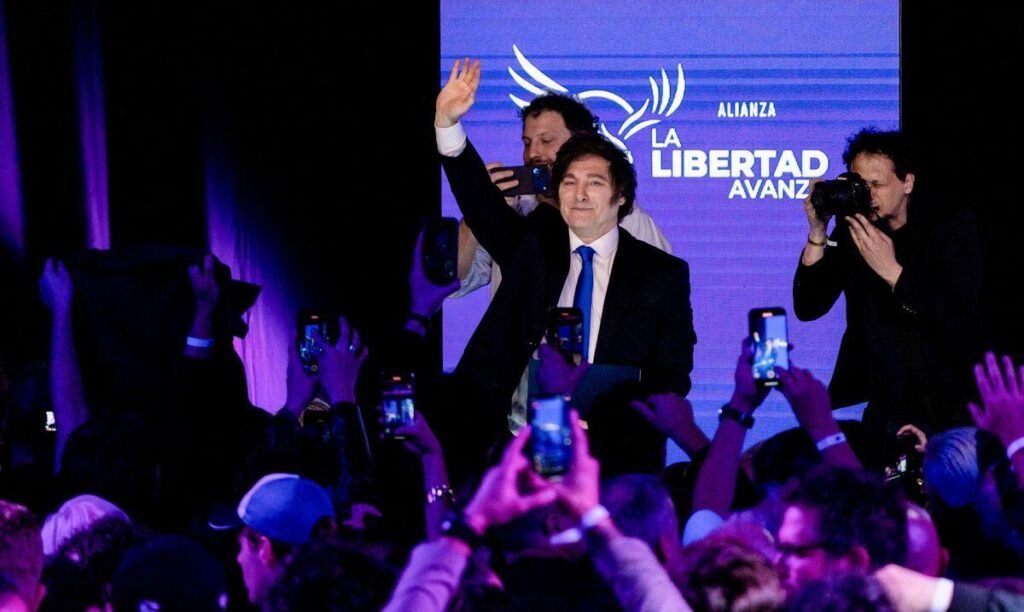
The result has raised questions about whether voters truly support Milei or were influenced by the economic pressure of Trump’s bailout. Agustin Cantilo, a 30-year-old broker from Tigre, said: “What matters most to me now is stability. Milei is fixing the macro issues: low inflation, a stable dollar… We’ve never had economic stability.”
Since taking office in December 2023, Milei has implemented sharp spending cuts, dubbed the “chainsaw” policy, which helped reduce inflation from over 200% to about 30%. Yet, his approach of using dollar reserves to keep the peso overvalued prompted an International Monetary Fund loan of $20 billion and the recent US bailout.
Despite falling inflation, the economy has suffered: real wages have dropped, over 200,000 jobs have been lost, and roughly 18,000 businesses have closed. Economist Hernán Letcher described the result as surprising, noting that social indicators remain poor and suggesting that “a cheap dollar wins elections.”
Argentina Midterm Election

Analysts also point to fear of returning to deep economic crises and widespread anti-Peronism as driving forces behind Milei’s win. Sociologist Juan Gabriel Tokatlian said Milei’s campaign successfully instilled fear of economic collapse if he lost, influencing voters to choose stability over political loyalty. (source)
Not all Argentinians welcomed the outcome. Aquiles Ferrario, 82, a bookshop owner in central Buenos Aires, expressed concern that voters were guided more by fear than by outrage and worried about Argentina Midterm Election becoming overly dependent on the US.
The midterm results mark a dramatic shift in Argentinian politics, raising questions about the balance between foreign influence, domestic economic policy, and voter sentiment.