
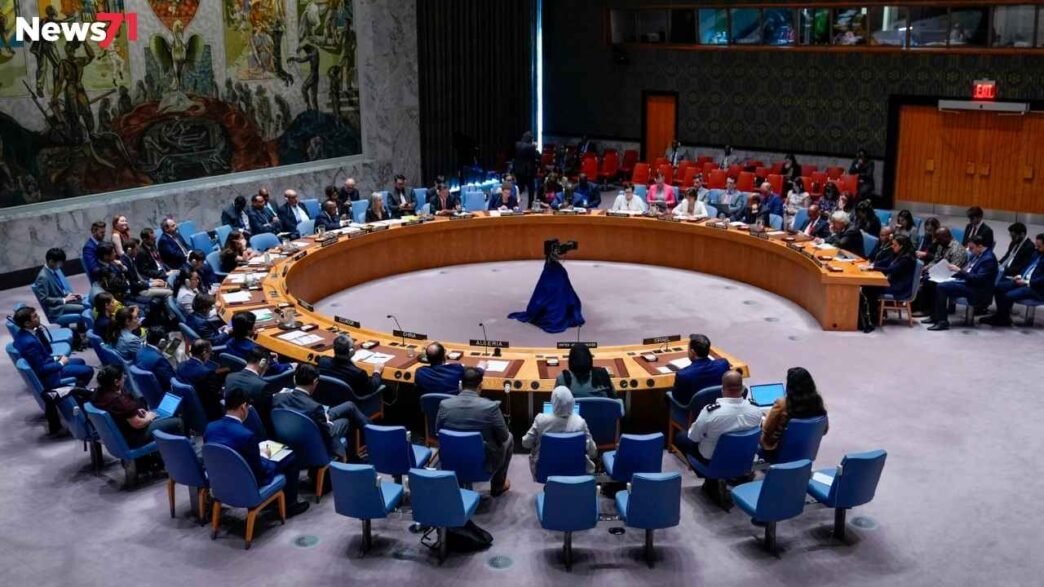
The UN Security Council has endorsed proposals put forward by Donald Trump for lasting peace in Gaza, including deploying an international stabilisation force and exploring a possible path to a sovereign Palestinian state. The resolution was passed by a vote of 13-0, with China and Russia abstaining. According to the US envoy to the UN, Mike Waltz, it charts “a new course in the Middle East for Israelis and Palestinians and all the people of the region alike.”
The resolution includes references to an independent Palestine, a concession the US made to gain backing from the Arab and Islamic world, who are expected to provide peacekeepers for the international stabilisation force (ISF). However, on the eve of the vote, Israeli Prime Minister Benjamin Netanyahu reaffirmed his government’s strong opposition to creating a Palestinian state, raising doubts about Israel’s compliance with the UN Security Council-mandated proposals.
Following the vote, Hamas rejected the resolution, describing it as an imposed “international guardianship mechanism” and insisting it would not disarm. Supporters believe the resolution could lead to the immediate easing of remaining aid restrictions in Gaza, the establishment of an international stabilisation force to fill the void left by Israeli military withdrawal, and steps toward reconstruction and eventual Palestinian self-determination and statehood.
UN Security Council
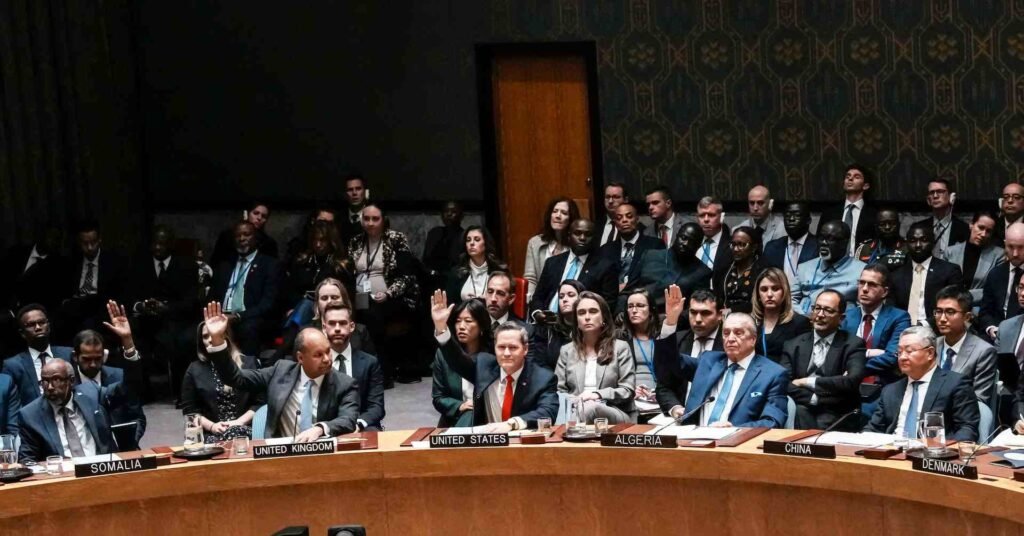
The inclusion of Palestinian statehood was a compromise addition to the US’s initial draft, which did not mention it. The resolution’s wording is cautious, indicating that once the Palestinian Authority reforms and Gaza’s rebuilding progresses, “the conditions may finally be in place for a credible pathway to Palestinian self-determination and statehood.” This language falls short of a firm commitment to a Palestinian state alongside Israel, as sought by Arab and Islamic states and many UN Security Council members. Nonetheless, delegates from these countries signaled acceptance of the compromise to maintain the current truce and provide immediate humanitarian relief to Gaza’s 2.2 million Palestinians.
James Kariuki, the UK chargé d’affaires, emphasized that “the transitional arrangements that we embark on today must be implemented in accordance with international law and respecting Palestinian sovereignty and self-determination.” Amar Bendjama, the Algerian envoy speaking for the Arab bloc, supported the resolution’s core objective, which is to maintain the ceasefire and create conditions for Palestinians to exercise their rights to self-determination and statehood. He highlighted the resolution’s annexe as integral, affirming “no annexation, no occupation, no forced displacement.”
Despite initial reluctant acceptance of the resolution’s wording in talks with Washington, Netanyahu later retreated following criticism from the far-right wing of his coalition, stating, “our opposition to a Palestinian state on any territory has not changed.”
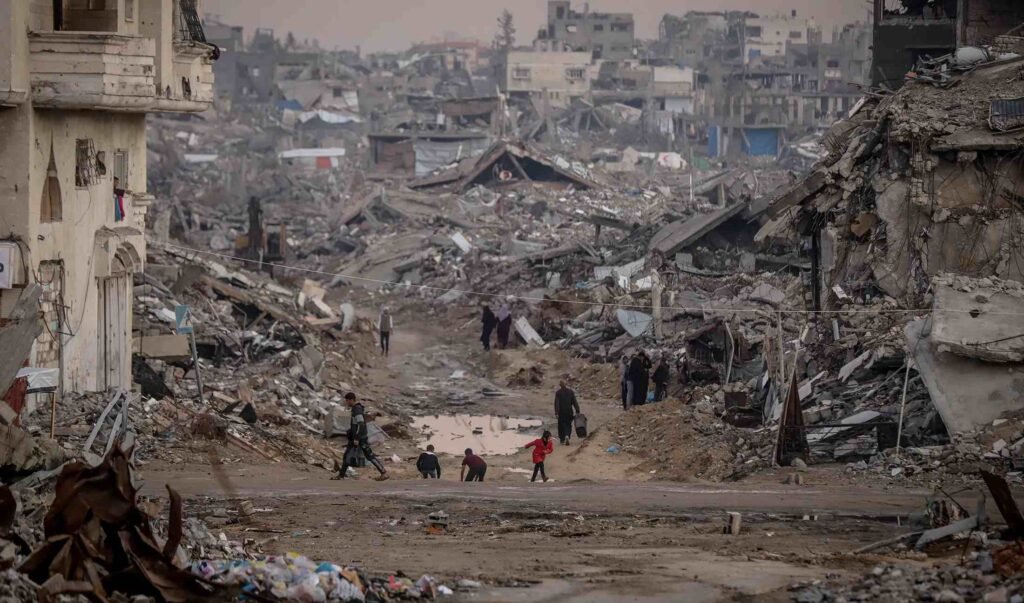
The resolution marks a rare moment of concerted UN action on Gaza after two years of diplomatic deadlock, during which over 71,000 Palestinians have died amid allegations of genocide by UN Security Council and human rights groups. However, the resolution’s vague terminology leaves many questions unresolved.
It establishes a “board of peace” chaired by Trump with undefined membership and oversight authority, which must report to the UN Security Council but is not bound by the UN or the Palestinian Authority. A Palestinian technocratic committee is also called for to manage Gaza’s governance and service delivery, though participant details remain unclear.
The ISF’s mandate includes disarming and dismantling armed groups like Hamas, but no troop-contributing countries have committed, and it is uncertain whether they would confront Hamas. Hamas reiterated its refusal to disarm, setting up a potential conflict with the international force. (Source)
The criteria for reforming the Palestinian Authority remain vague, with European diplomats urging speedy agreement on the Palestinian technocratic committee’s members.
Trump hailed the vote as “a moment of true Historic proportion” on social media and promised forthcoming announcements about the board and other developments.