


US President Donald Trump met Chinese leader Xi Jinping for the first time in six years, sparking optimism for easing tensions between the world’s two largest economies. The meeting took place in South Korea, where Trump described the discussions as amazing. Beijing later confirmed that both sides had reached a consensus on resolving what it called major trade issues. Relations between the two nations have been strained since Trump first introduced tariffs on Chinese imports during his earlier term in office. China retaliated with its own tariffs, triggering a prolonged trade confrontation. Although both governments agreed to a temporary truce earlier this year, disagreements continued to simmer beneath the surface.
Trump and Xi Meet After Six Years, Raising Hopes for Trade Breakthrough
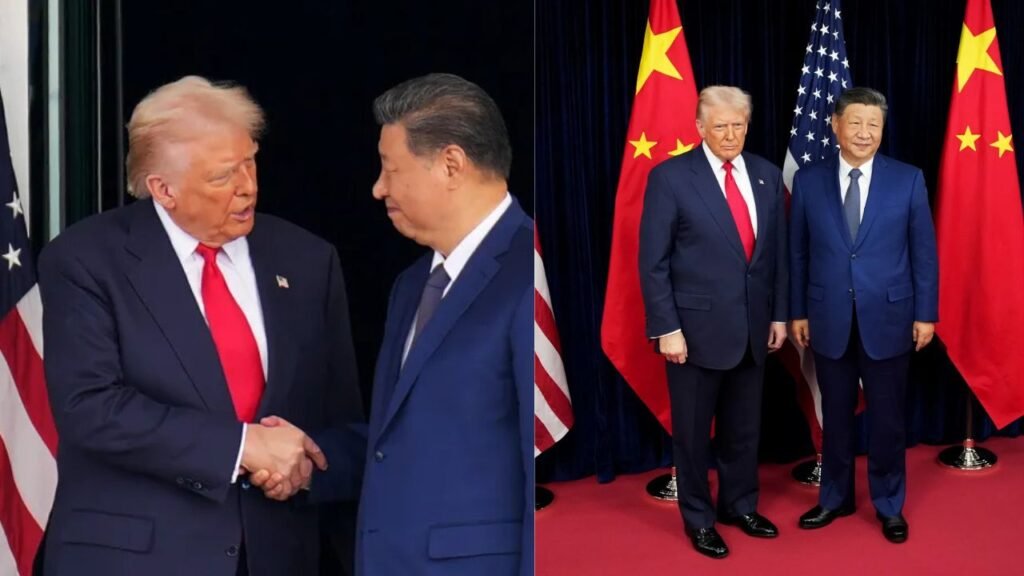
While Thursday’s talks did not produce a formal trade deal, the tone from both capitals suggested progress. Analysts believe the leaders are edging closer to a long-term settlement after months of quiet negotiations. Trade agreements often take years to finalize, yet Trump has pushed to achieve results within months, reflecting his administration’s fast-paced approach to global diplomacy. A notable achievement for Trump is China’s decision to suspend export controls on rare earth materials. These resources are critical for manufacturing items ranging from smartphones to fighter jets, and the move marks a significant gesture of goodwill from Beijing. Speaking to reporters aboard Air Force One, Trump expressed satisfaction, saying that China would immediately begin purchasing tremendous amounts of soybeans and other US agricultural products. The Chinese tariffs had previously halted American soybean exports, severely impacting farmers—one of Trump’s strongest voter bases.
However, not every issue found resolution. There was no breakthrough regarding the future of TikTok, the popular video-sharing platform whose US operations Trump has sought to separate from Chinese ownership. Beijing later stated that discussions on the matter would continue. The United States has also announced plans to reduce certain tariffs linked to the import of chemicals used in producing fentanyl, a powerful synthetic drug. Yet other tariffs remain intact, leaving many Chinese goods taxed at rates exceeding forty percent for American importers. In another significant development, Trump revealed that Chinese officials would hold discussions with Nvidia CEO Jensen Huang. The move is viewed as an attempt to manage growing tensions surrounding artificial intelligence chips, a sector at the heart of the US-China technology rivalry. Beijing also extended an invitation to Trump to visit China in April, signaling further steps toward normalizing relations.
Experts called the meeting a positive opening. Henry Wang, a former adviser to China’s State Council, said the talks went very well and laid the foundation for a future agreement. While no trade deal was signed, he described the discussions as a good start that could shape the economic direction of both nations in the coming months.