

Inside a single cramped room at Gaza’s Nasser Hospital, a small forensic team works with almost no equipment to uncover the truth behind bodies returned from Israel. With no DNA testing labs or cold storage facilities, the doctors are facing an immense challenge in identifying the dead and determining what happened to them. Over the last eleven days, 195 bodies have been handed back to Gaza by Israeli authorities under Donald Trump’s ceasefire agreement, which also saw the return of 13 Israeli hostages. Gaza’s medical authorities released photographs showing many bodies decomposed and dressed only in civilian clothes or underwear. Some appeared to have multiple injuries, with wrists tied behind their backs and blindfolds still in place.
Dr. Ahmed Dheir, head of the forensic unit at Nasser Hospital, said their work is nearly impossible due to the lack of cold storage. The bodies arrive completely frozen, he explained. By the time they thaw, decomposition starts, and we lose crucial evidence. We can only take samples and record what we see. Images reviewed by medical officials and human rights groups show deep marks around wrists, ankles, and necks. Forensic expert Dr. Alaa al-Astal reported that several bodies displayed signs consistent with torture. Some restraints were so tight that blood flow was cut off, he said. When the blindfolds were removed, there were deep grooves left around the eyes and neck.
Gaza Doctors Report: Struggling to Uncover Truth Behind Returned Bodies from Israel
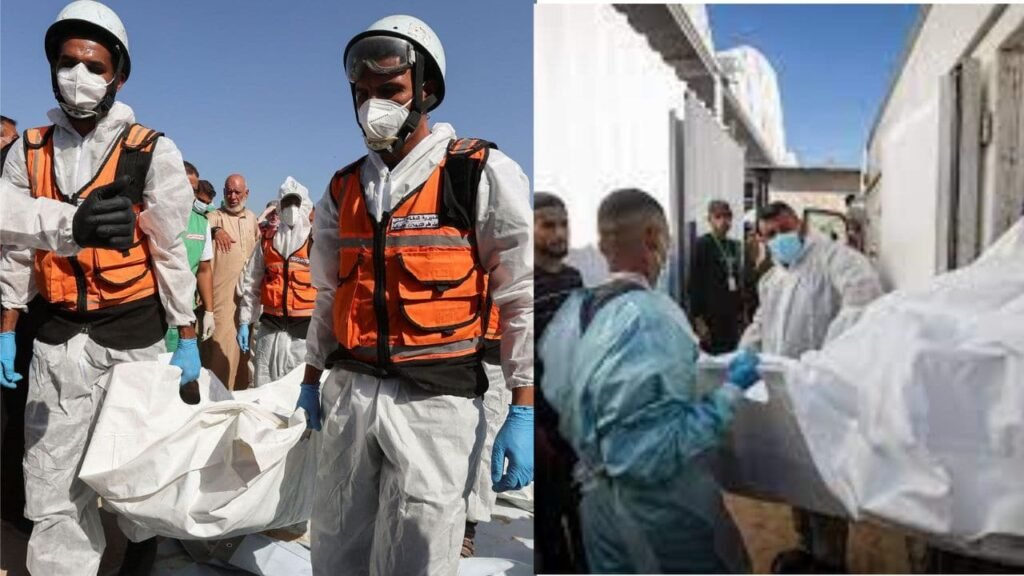
The team believes some of these markings could indicate severe mistreatment before death, but without proper autopsies, the truth remains uncertain. International forensic specialists agree that post-mortem examinations are essential to confirm whether torture or abuse occurred. Michael Pollanen, a forensic pathologist from the University of Toronto, described the situation as an international forensic emergency. He emphasized the importance of full medical autopsies to reveal how these deaths occurred. Gaza doctors also face difficulties distinguishing between fighters, civilians, and detainees among the returned dead. Some bodies were dressed in military gear, but most arrived in civilian clothing, making identification and classification difficult. Only a few bodies were returned with identification, and even those records contained errors, according to Gaza’s forensic committee. Dr. Dheir noted that Israel has not shared full data about the deceased. They have the information, he said, but they haven’t provided details like the time or place of death. We’e received limited DNA profiles but nothing more.
Israel’s military maintains that all bodies returned were combatants and denies tying or mistreating them. Officials in Tel Aviv have dismissed Gaza’s reports as attempts to tarnish Israel’s image. Meanwhile, the families of the missing continue to wait outside Nasser Hospital, hoping for closure. With limited identification resources, around 50 bodies have been identified through basic visual evidence, while others have been buried unidentified due to lack of space.For many families, the uncertainty is unbearable. Without DNA testing, we don’t know if we’re burying our real relatives, said Houwaida Hamad, searching for her nephew. Trump’s ceasefire may have paused the violence, but for Gaza doctors and grieving families, the search for truth and justice has only begun.